
Colosseum Self-Guided Tour: A Comprehensive Plan
Embark on an immersive journey! Explore the Colosseum at your own pace with a smartphone audio tour via apps like WeGoTrip or AI Video Guide,
featuring detailed routes and GPS navigation.
Welcome to the heart of Ancient Rome! The Colosseum, originally known as the Flavian Amphitheatre, stands as an iconic symbol of Roman power and engineering prowess. This colossal structure, completed in 80 AD, hosted spectacular public events for centuries, including gladiatorial contests, animal hunts, and public executions.
Today, exploring the Colosseum offers a unique opportunity to step back in time and imagine the grandeur of the Roman Empire. A self-guided tour allows you to delve into its rich history at your own rhythm, utilizing readily available resources like smartphone applications. These apps, such as WeGoTrip and AI Video Guide, provide detailed audio commentary, historical context, and navigational assistance, enhancing your experience.
Preparing for your visit is key. Understanding the Colosseum’s layout – encompassing the arena floor, the hypogeum (underground chambers), and the tiered seating – will maximize your appreciation. Consider combining your Colosseum visit with explorations of the nearby Roman Forum and Palatine Hill for a comprehensive understanding of ancient Roman life. Embrace the opportunity to uncover the stories etched within these ancient stones, and prepare for an unforgettable journey through history!
Planning Your Visit: Tickets & Timing
Strategic planning is crucial for a smooth Colosseum self-guided tour. Purchasing tickets in advance is highly recommended to bypass potentially lengthy queues, especially during peak season. Several ticket options are available, often including access to the Roman Forum and Palatine Hill – consider a combined ticket for optimal value.
Online booking through the official CoopCulture website or authorized resellers is advisable. Be aware of potential scams and only use reputable sources. When selecting your visit time, factor in the Colosseum’s expansive size; allow at least 3-4 hours for a thorough exploration, particularly if utilizing a detailed audio guide like those offered by WeGoTrip or AI Video Guide.
Early morning or late afternoon visits generally experience fewer crowds. Remember to check the Colosseum’s official website for any temporary closures or schedule changes. Download your chosen audio tour app and any necessary maps before your visit to ensure seamless navigation. Proper preparation will transform your self-guided experience from potentially chaotic to wonderfully immersive!
Understanding Colosseum Ticket Options
Navigating Colosseum ticket options can be complex, but understanding the choices maximizes your self-guided tour experience. The Standard Ticket grants access to the first and second levels, offering impressive views and a general overview. However, for a more in-depth exploration, consider tickets including access to the Arena Floor and Hypogeum (underground chambers).
These restricted-access tickets provide a unique perspective on gladiatorial contests and the Colosseum’s inner workings. Combined tickets, encompassing the Colosseum, Roman Forum, and Palatine Hill, represent excellent value and allow for a comprehensive exploration of ancient Rome. These are often available with or without access to the special areas.
Guided tour options exist, but for a self-guided experience, prioritize tickets compatible with audio guide apps like WeGoTrip or AI Video Guide. These apps enhance your understanding without the constraints of a group tour. Check CoopCulture’s official website for current pricing and availability, and book in advance to secure your preferred access level.
Best Time to Visit the Colosseum
Timing your visit strategically is crucial for an enjoyable self-guided Colosseum tour. Early mornings, immediately after opening, and late afternoons, a few hours before closing, generally offer smaller crowds. This allows for a more immersive experience, especially when utilizing audio guides and navigating the site independently.
Avoid peak season – summer (June-August) – if possible, as temperatures soar and crowds swell. Spring (April-May) and Fall (September-October) provide pleasant weather and manageable visitor numbers. Weekdays are typically less crowded than weekends. Consider visiting mid-week for optimal conditions.
Remember that even with advance tickets, security lines can be lengthy. Arrive at least 30 minutes before your scheduled entry time. Utilizing a self-guided tour app like WeGoTrip allows flexibility; you can pause and resume your exploration as needed, adapting to crowd flow. Checking the official Colosseum website for anticipated crowd levels is also advisable.
Getting to the Colosseum: Transportation
Reaching the Colosseum is remarkably convenient thanks to Rome’s public transportation network. The Metro Line B stops directly at the “Colosseo” station, offering the quickest and most direct route from Termini Station and other key locations. Several bus lines also serve the area, including the 57, 75, 85, 87, 117, and 810.
Walking is a viable option if you’re staying in the city center, allowing you to soak in the Roman atmosphere. Taxis and ride-sharing services are readily available, but can be more expensive and subject to traffic delays.
When planning your self-guided tour, factor in travel time and potential walking distances from the transportation stop to the Colosseum entrance. Utilizing navigation apps on your smartphone can assist with route planning. Remember to validate your bus or metro ticket before boarding to avoid fines. Consider purchasing a Roma Pass for access to public transport and discounts on attractions.
Essential Apps for a Self-Guided Tour
Enhance your Colosseum experience with dedicated mobile applications designed for self-guided exploration. WeGoTrip stands out, offering downloadable multimedia audio tours with detailed, step-by-step navigation and live GPS mapping directly on your smartphone. This allows for a flexible and immersive experience, guiding you from stop to stop.
Alternatively, the AI Video Guide App provides a compelling alternative, delivering historical insights through video content available in eight languages. These apps transform your smartphone into a personal tour guide, eliminating the need for expensive group tours or cumbersome audio devices.
Beyond tour-specific apps, general navigation tools like Google Maps are invaluable for reaching the Colosseum and surrounding areas. Downloading offline maps can save on data charges. Many apps also offer information on nearby dining and attractions, completing your self-guided adventure.
WeGoTrip App: Features & Benefits
WeGoTrip revolutionizes your Colosseum visit with its comprehensive self-guided audio tour experience. The app delivers a downloadable multimedia tour, transforming your smartphone into a knowledgeable guide. Benefit from a meticulously planned route featuring step-by-step navigation, ensuring you don’t miss key historical points within the Colosseum and surrounding Roman Forum/Palatine Hill areas.
A standout feature is the live GPS map integration, displaying your location and guiding you seamlessly from one stop to the next. This eliminates the stress of navigating independently and allows you to fully immerse yourself in the historical surroundings. The app provides detailed information, enriching your understanding of the Colosseum’s architecture, history, and significance.
WeGoTrip offers a cost-effective alternative to traditional guided tours, providing a flexible and personalized experience. Enjoy the freedom to explore at your own pace, pausing and revisiting points of interest as desired. It’s a convenient and informative companion for any independent traveler.
AI Video Guide App: An Alternative
For a visually engaging experience, consider the AI Video Guide app as a compelling alternative to traditional audio tours. This innovative app unlocks the secrets of Ancient Rome through a deep dive into its history, offering a unique and immersive exploration of the Colosseum and its surroundings.
A key benefit is its multilingual support, currently available in eight languages, catering to a diverse international audience. The app doesn’t just provide audio; it utilizes video content to bring the Colosseum’s past to life, enhancing understanding and engagement. Imagine witnessing reconstructions and historical context directly on your smartphone!
The AI Video Guide app provides a detailed and informative tour, comparable to WeGoTrip, but with a stronger emphasis on visual learning. It’s a fantastic option for those who prefer a more dynamic and visually stimulating way to absorb historical information. Coupled with an entrance ticket to Castel Sant’Angelo, it offers a comprehensive Roman experience.
The Colosseum’s History: A Brief Overview
Construction of the Colosseum, originally known as the Flavian Amphitheatre, began around 70-72 AD under Emperor Vespasian of the Flavian dynasty, and was completed in 80 AD under his successor, Titus. This monumental structure was built on the site of Nero’s Golden House, a deliberate act to return land to the public and distance the new dynasty from its predecessor.
For centuries, the Colosseum served as the epicenter of Roman entertainment. Gladiatorial contests, public spectacles, animal hunts, and even mock sea battles (naumachiae) were staged within its walls, captivating audiences of up to 50,000 spectators. These events were not merely entertainment; they were displays of power, political maneuvering, and social control.
Over time, the Colosseum’s function evolved. After the decline of the Roman Empire, it fell into disuse and suffered damage from earthquakes and stone-robbing; Despite this, it remained a powerful symbol of Imperial Rome, inspiring awe and fascination for centuries. Today, it stands as a testament to Roman engineering and a poignant reminder of a bygone era.
Exploring the First Level (Arena Floor & Hypogeum)
The first level of the Colosseum offers a glimpse into the heart of the action. While the original arena floor is largely gone, modern reconstructions provide a sense of the scale and drama of gladiatorial combats. Imagine the roar of the crowd and the clash of steel as you stand where warriors once fought!
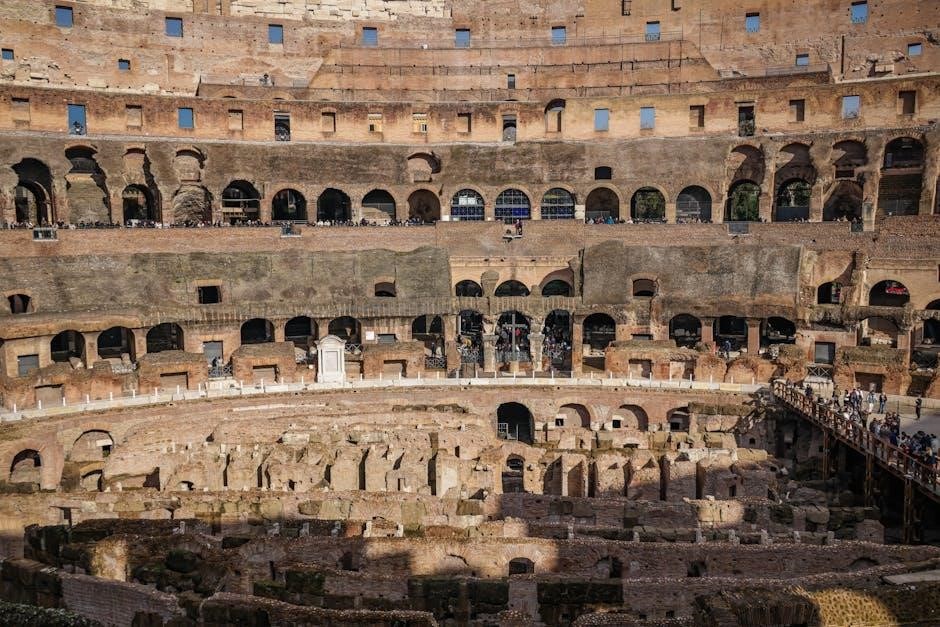
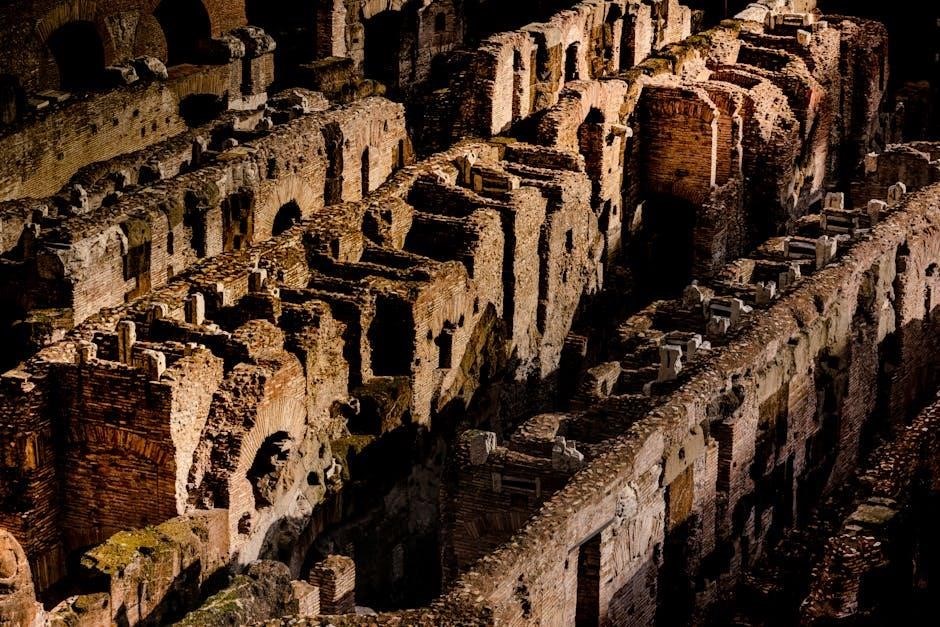
A key feature of this level is access to the Hypogeum, the underground network of tunnels and chambers beneath the arena floor. This complex system housed gladiators, animals, and machinery used to create spectacular special effects during the games. Explore the remnants of trapdoors, lifts, and corridors that once bustled with activity.
Self-guided tours utilizing apps like WeGoTrip provide detailed insights into the Hypogeum’s function and the logistics of staging events. Visualize how animals were hoisted into the arena and how gladiators prepared for battle. Understanding the Hypogeum is crucial to appreciating the Colosseum’s engineering marvels and the spectacle it offered;
The Hypogeum: Beneath the Arena
Descending into the Hypogeum is like stepping back in time to the Colosseum’s operational core. This subterranean network, once hidden beneath the wooden arena floor, was a labyrinth of tunnels, cages, and mechanical devices. It wasn’t originally part of the Colosseum’s design, but was added later during the reign of Emperor Domitian.
Imagine the frantic activity below – gladiators awaiting their fate, wild animals in holding pens, and stagehands operating complex machinery. A sophisticated system of trapdoors and elevators allowed for dramatic entrances and exits, enhancing the spectacle for the audience above. These mechanisms, powered by human and animal labor, created a sense of surprise and wonder.
Self-guided audio tours, particularly those offered through apps like WeGoTrip and AI Video Guide, vividly reconstruct the Hypogeum’s function. They explain how the network facilitated the elaborate staging of gladiatorial contests and public spectacles. Exploring this level provides a profound understanding of the Colosseum’s logistical complexity and the ingenuity of Roman engineers.
Second Level: Seating & Views
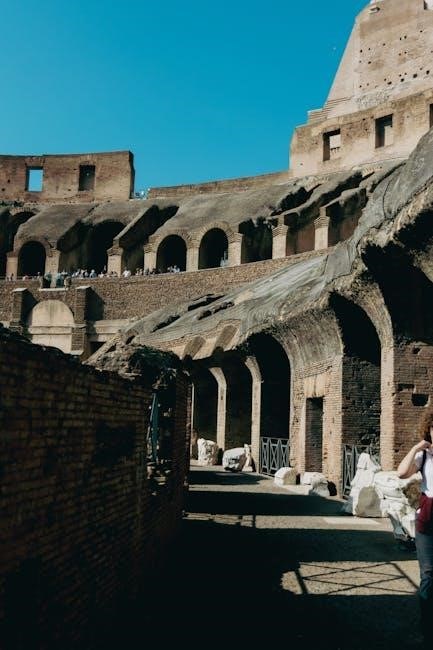
Ascending to the second level of the Colosseum reveals the sophisticated seating arrangement designed to reflect Roman social hierarchy. This tier, originally reserved for the equites (knights) and wealthy citizens, offered excellent views of the arena floor and the unfolding spectacles below. Imagine the bustling atmosphere as these privileged spectators observed the gladiatorial combats and public games.
The architecture of this level showcases the Colosseum’s masterful engineering. Notice the intricate network of arches and vaults that supported the massive structure and facilitated the flow of people. Self-guided tours, utilizing apps like WeGoTrip and AI Video Guide, provide detailed explanations of the seating sections and the social distinctions they represented.
From this vantage point, you can appreciate the scale of the arena and the ingenuity of the Roman design. The views offer a unique perspective on the Hypogeum below and the overall layout of the Colosseum. It’s a crucial stop for understanding the Colosseum’s function as both an entertainment venue and a symbol of Roman power.
Third Level: The Upper Tier
Reaching the third level of the Colosseum provides a panoramic perspective, revealing the full grandeur of the amphitheater and the surrounding Roman landscape. This uppermost tier, originally designated for the common citizens and women, was the least prestigious seating area, yet offered a thrilling view of the events unfolding below. Imagine the energy of the crowds packed into this space!
The architectural details of this level demonstrate the Colosseum’s innovative construction techniques. Notice the simpler design compared to the lower levels, reflecting its function as a space for the general public. Self-guided tour apps, such as WeGoTrip and AI Video Guide, offer insights into the social dynamics and the practical considerations of accommodating such large audiences.
From this height, you can truly grasp the Colosseum’s immense scale and its impact on the Roman cityscape. The views extend beyond the arena, offering glimpses of the Roman Forum and Palatine Hill. It’s a vital point for understanding the Colosseum’s role as a central hub of Roman life and entertainment.
The Colosseum’s Architecture: Key Features
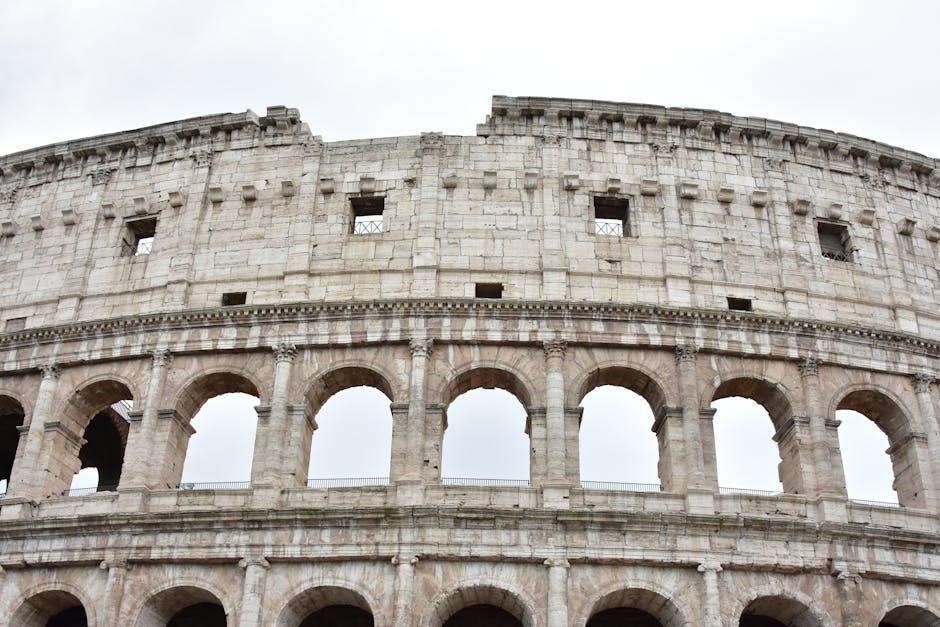
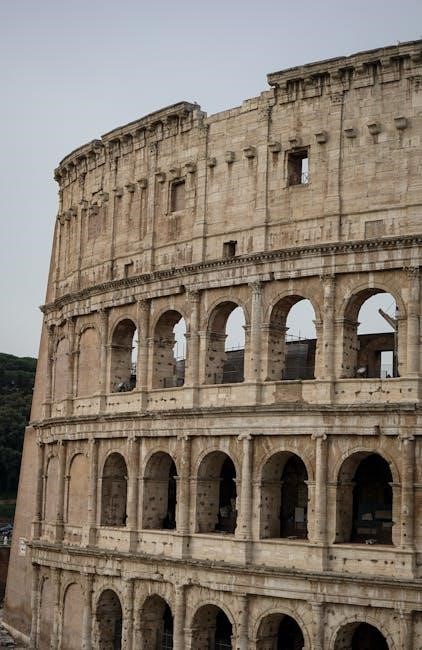
The Colosseum’s architectural brilliance lies in its innovative use of concrete, arches, and vaults – Roman engineering at its finest. Observe the exterior façade, constructed of travertine stone, originally sourced from nearby quarries. The three tiers of arches, each adorned with different orders of columns (Doric, Ionic, and Corinthian), showcase a sophisticated understanding of classical design.
A key feature is the complex system of 80 entrances, allowing for efficient crowd control – crucial for managing tens of thousands of spectators. The radial seating arrangement, designed to optimize viewing angles, demonstrates a practical approach to amphitheater design. Self-guided tour apps, like WeGoTrip and AI Video Guide, highlight these features with detailed explanations.
Don’t overlook the remnants of the velarium, a massive awning that shielded spectators from the sun. This ingenious system, operated by Roman sailors, demonstrates the Colosseum’s commitment to comfort and spectacle. Understanding these architectural elements enhances your appreciation for the Colosseum’s enduring legacy.
Roman Forum & Palatine Hill: Combined Ticket
Maximize your Roman experience with a combined ticket granting access to the Colosseum, Roman Forum, and Palatine Hill. This offers exceptional value and allows you to immerse yourself in the heart of ancient Rome. The Roman Forum, once the bustling center of Roman life, showcases ruins of temples, basilicas, and government buildings. Utilize self-guided tour apps like WeGoTrip for detailed historical context and navigation.
Palatine Hill, one of the seven hills of Rome, offers breathtaking views and legendary origins – believed to be the founding place of the city by Romulus. Explore the imperial palaces and gardens, imagining the lives of emperors and aristocrats. A combined ticket streamlines your visit, avoiding separate queues and maximizing your time.
Many audio guides, including those available via smartphone apps, provide integrated tours of all three sites. Consider dedicating a full day to fully appreciate the historical significance and architectural wonders of this interconnected trio of ancient landmarks.
Navigating the Roman Forum
The Roman Forum is an expansive archaeological site, requiring a strategic approach for effective exploration. Begin at the entrance near the Colosseum, and utilize a detailed map – readily available through self-guided tour apps like WeGoTrip – to orient yourself. Key landmarks include the Temple of Saturn, the Arch of Titus, and the Basilica of Maxentius and Constantine.
The Via Sacra, the main street of ancient Rome, runs through the Forum, providing a logical path for exploration. Be prepared for uneven terrain and wear comfortable shoes. Audio guides offer invaluable context, bringing the ruins to life with stories of political intrigue, religious ceremonies, and daily life.
Consider focusing on specific areas of interest, such as the religious structures or the governmental buildings, to avoid feeling overwhelmed. Downloadable multimedia tours on apps provide step-by-step navigation, ensuring you don’t miss significant sites. Allow at least three hours to adequately explore this historically rich area.
Exploring Palatine Hill
Palatine Hill, one of Rome’s seven hills, offers breathtaking views and a glimpse into the opulent lives of emperors and aristocrats. Accessible with a combined ticket from the Colosseum and Roman Forum, it’s best explored with a pre-planned route, easily facilitated by self-guided tour apps. Begin at the House of Augustus, the first Roman emperor, and explore the remnants of his palace.
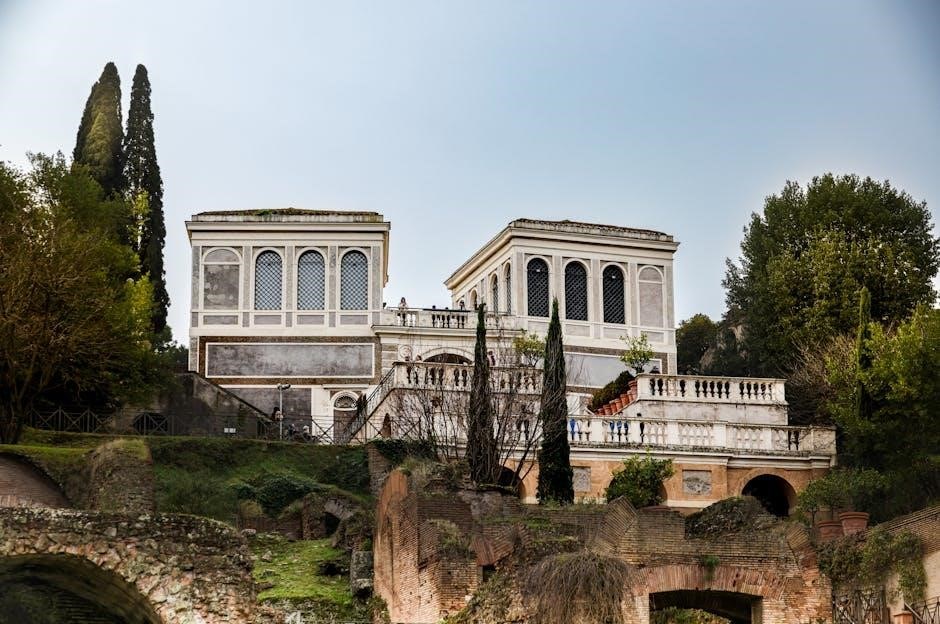
The Farnese Gardens, a beautiful Renaissance garden built upon the ruins, provide a tranquil escape. Don’t miss the Domus Flavia, the public wing of the imperial palace, and the Domus Augustana, the emperor’s private residence. Audio guides enhance the experience, detailing the history and significance of each structure.
Wear comfortable shoes, as the terrain is uneven and involves considerable walking. Allow at least two to three hours to fully appreciate the panoramic views and archaeological treasures. Utilizing a smartphone app with a live GPS map will help you navigate the expansive site efficiently and discover hidden gems.
Audio Guide Considerations: Pros & Cons
Choosing an audio guide for your Colosseum self-guided tour presents both advantages and disadvantages. Pros include the freedom to explore at your own pace, delving deeper into areas of personal interest without the constraints of a group tour. Smartphone apps like WeGoTrip and AI Video Guide offer detailed routes, GPS navigation, and multimedia content, enhancing the experience.
However, relying solely on an audio guide can sometimes feel disconnected. Some visitors find the audio difficult to follow, or the information lacks the nuance of a live guide’s storytelling. Technical issues, such as battery drain or app malfunctions, can also disrupt your tour;
Consider downloading the audio guide beforehand to avoid relying on potentially spotty Wi-Fi. Weigh the cost of app subscriptions against the benefits of detailed information and navigation. Ultimately, a well-chosen audio guide can significantly enrich your Colosseum visit, but be prepared for potential drawbacks.
Accessibility at the Colosseum
The Colosseum strives to be accessible to all visitors, though navigating its ancient structure presents challenges. Wheelchair access is available via a dedicated entrance, avoiding the main ticket line, and elevators provide access to the second level. However, the first level, including the arena floor and hypogeum, remains partially inaccessible due to the historic nature of the site.
Accessible restrooms are available, and staff are generally helpful in providing assistance. The Roman Forum and Palatine Hill, often visited with a combined ticket, also offer varying levels of accessibility. Uneven terrain and cobblestone paths can pose difficulties for those with mobility impairments.
Planning ahead is crucial. Check the official Colosseum website for detailed accessibility information and consider contacting them directly with specific needs. Utilizing a self-guided tour app allows for pausing and adjusting the pace to accommodate individual requirements, enhancing the overall experience for visitors with disabilities.
Nearby Attractions & Dining Options
Extend your Roman adventure beyond the Colosseum! The area surrounding this iconic landmark is rich with historical sites and culinary delights. A short walk leads to the Roman Forum and Palatine Hill, included with a combined ticket, offering a deeper dive into ancient Roman life.
For art enthusiasts, the Capitoline Museums showcase a remarkable collection of Roman sculptures and paintings. The Basilica di San Clemente, with its layered history, is another fascinating nearby attraction. When hunger strikes, numerous trattorias and restaurants cater to all tastes and budgets.
Enjoy traditional Roman pasta dishes, pizza, or gelato. Several establishments offer outdoor seating with views of the Colosseum, enhancing your dining experience. Consider exploring Monti, a charming neighborhood known for its artisan shops and diverse culinary scene. Remember to check reviews and make reservations, especially during peak season, to secure your spot!