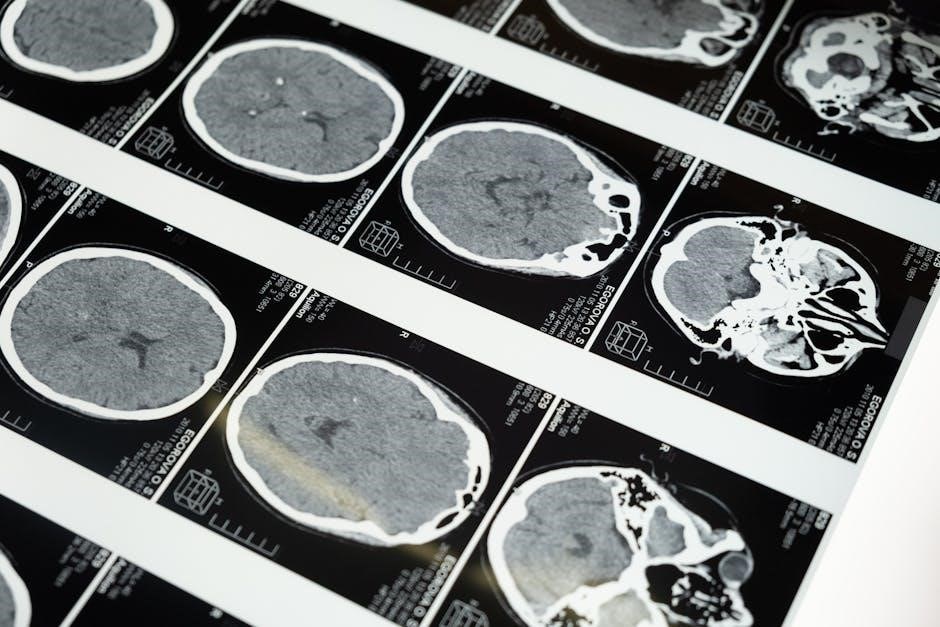
The brain’s lobes, critical cerebrum sections, form the central nervous system’s core, specializing in functions like executive control, sensory processing, and memory.
Overview of the Cerebrum
The cerebrum, the brain’s largest component, stands as the command center for higher-level cognitive functions. Divided into two distinct hemispheres – left and right – it orchestrates everything from thought and language to memory and voluntary movement. Each hemisphere isn’t a monolithic entity; rather, it’s partitioned into four primary lobes: the frontal, parietal, temporal, and occipital lobes.
This structural division isn’t arbitrary. Each lobe assumes specialized roles, contributing uniquely to our overall experience and capabilities. The cerebrum’s intricate network allows for complex information processing, enabling us to interact with the world around us in meaningful ways. Understanding its organization is fundamental to grasping the intricacies of brain function and neurological processes.
The Four Primary Lobes
The cerebrum’s architecture is defined by its four distinct lobes, each dedicated to specific cognitive and sensory processes. The frontal lobe governs executive functions, personality, and voluntary movement. Behind it, the parietal lobe integrates crucial sensory information, including touch, temperature, and spatial awareness.
Further back, the temporal lobe is pivotal for auditory perception, language comprehension, and the formation of long-term memories. Finally, the occipital lobe resides at the rear of the brain, solely dedicated to processing visual information – colors, shapes, and depth perception. These lobes don’t operate in isolation; rather, they collaborate seamlessly to create a unified experience of the world.

Frontal Lobe: The Control Center
This lobe is fundamentally involved in higher cognitive functions, crucial decision-making processes, and the control of voluntary movements within the human brain.
Location and Anatomy of the Frontal Lobe
Positioned at the very front of the brain, extending from the forehead back to the central sulcus, the frontal lobe represents the largest lobe within the cerebrum. Its anterior portion, the prefrontal cortex, is particularly expanded in humans, distinguishing us from other species and supporting complex cognitive abilities.
Anatomically, the frontal lobe is bounded by the frontal sinus, the orbital surfaces of the eyes, and the anterior cranial fossa. Deep within, the frontal lobe contains gray matter nuclei, including the caudate nucleus and putamen, integral to motor control and reward pathways. The precentral gyrus, housing the primary motor cortex, initiates voluntary movements.
Further divisions include Broca’s area, vital for speech production, and regions responsible for planning, reasoning, and personality expression. Understanding its location is key to appreciating its broad influence on behavior.
Executive Functions and Decision-Making
The frontal lobe’s prefrontal cortex is paramount for executive functions – a suite of higher-order cognitive processes. These include planning, problem-solving, working memory, and abstract thought, enabling us to navigate complex situations and achieve goals. Decision-making relies heavily on this area, weighing potential outcomes and selecting appropriate actions.
Crucially, the prefrontal cortex allows for impulse control and behavioral flexibility, suppressing inappropriate responses and adapting to changing circumstances. It integrates information from other brain regions, evaluating emotional context and past experiences to inform choices. Damage to this area can result in impaired judgment, difficulty with planning, and personality changes.
Essentially, the frontal lobe orchestrates our ability to think strategically, regulate emotions, and make reasoned decisions, shaping our behavior and interactions with the world.
Motor Control and Voluntary Movement
The frontal lobe, specifically the primary motor cortex located within it, directly controls voluntary movements. This region contains a topographical map of the body, with specific areas corresponding to different muscle groups. Signals originating here travel down the spinal cord to initiate muscle contractions, enabling precise and coordinated actions.
Beyond initiation, the frontal lobe also plays a role in planning and sequencing movements. The premotor cortex and supplementary motor area contribute to complex motor behaviors, coordinating muscle activity for tasks like reaching, grasping, and walking. These areas work in concert to ensure smooth and efficient execution.

Furthermore, the frontal lobe integrates sensory feedback to refine movements and make necessary adjustments, ensuring accuracy and adaptability. This intricate system allows us to interact with our environment through purposeful and controlled physical actions.

Parietal Lobe: Sensory Integration
The parietal lobe expertly integrates diverse sensory information, including touch, temperature, pain, and spatial awareness, creating a comprehensive perception of our surroundings.
Processing Sensory Information
The parietal lobe stands as a central hub for processing a vast array of sensory inputs, extending far beyond simple touch. It receives signals regarding pressure, pain, and temperature from throughout the body, meticulously constructing a detailed map of somatic sensations. This isn’t merely passive reception; the parietal lobe actively interprets these signals, allowing us to discern the qualities and locations of stimuli.
Furthermore, it integrates this tactile information with proprioceptive feedback – our sense of body position and movement – and visual data. This complex interplay is crucial for tasks requiring fine motor control, spatial orientation, and understanding the relationship between our bodies and the external world. Damage to the parietal lobe can result in deficits in sensory perception, difficulty recognizing objects by touch, and impaired spatial awareness, highlighting its vital role in constructing a coherent sensory experience.
Spatial Awareness and Navigation
The parietal lobe is fundamentally involved in constructing and maintaining our internal representation of space, enabling both spatial awareness and efficient navigation. It doesn’t just passively receive visual information about our surroundings; it actively processes this data, alongside proprioceptive and vestibular inputs, to create a dynamic ‘mental map’.
This mental map allows us to understand our position relative to objects, judge distances, and plan routes. The posterior parietal cortex, in particular, plays a critical role in transforming sensory information into motor commands necessary for navigating complex environments. Damage to this area can lead to difficulties with spatial orientation, getting lost easily, and problems with tasks requiring visual-spatial reasoning, demonstrating its essential contribution to our ability to interact effectively with the world around us.
Integration of Touch, Temperature, and Pain
The parietal lobe serves as a crucial hub for processing somatosensory information – the sensations we experience through touch, temperature, and pain. Specifically, the somatosensory cortex, located within the parietal lobe, receives signals from receptors throughout the body, allowing us to perceive these sensations with remarkable detail.
This isn’t simply a passive reception of signals; the parietal lobe actively integrates this information, determining the location, intensity, and quality of each sensation. It allows us to differentiate between a gentle touch and a painful stimulus, or between hot and cold temperatures. Furthermore, this integration is vital for protective reflexes and learning from potentially harmful experiences, ensuring our safety and well-being. Damage to this area can result in impaired tactile discrimination and difficulty perceiving pain.
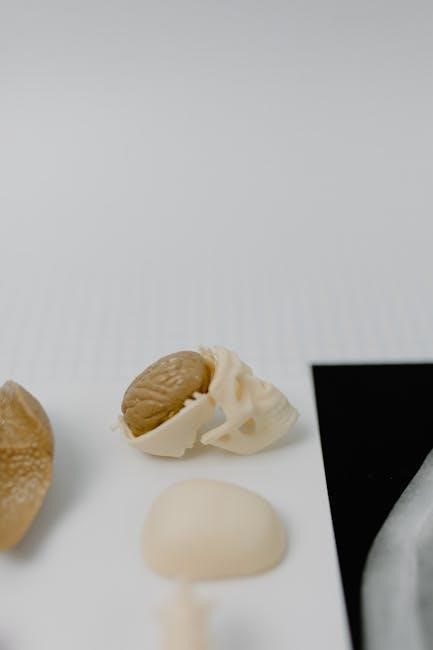
Temporal Lobe: Auditory and Memory Processing
The temporal lobes are deeply involved in auditory perception, language comprehension, memory formation, and retrieval, alongside playing a role in emotional responses.
Auditory Perception and Language Comprehension
The temporal lobe’s primary role centers around processing auditory information, enabling us to perceive and interpret sounds from our environment. This includes recognizing different tones, volumes, and rhythms. Crucially, it houses the auditory cortex, responsible for analyzing these sound signals.
Beyond simply hearing, the temporal lobe is vital for language comprehension. Specifically, Wernicke’s area, typically located in the left temporal lobe, plays a critical role in understanding both spoken and written language. Damage to this area can result in difficulties in comprehending speech, even if hearing remains intact.
This lobe doesn’t just decode words; it also contributes to understanding the meaning and context of language, allowing for effective communication and interpretation of complex information. The intricate interplay within the temporal lobe allows us to navigate the world of sound and language with remarkable precision.
Memory Formation and Retrieval
The temporal lobe is deeply involved in both the formation of new memories and the retrieval of existing ones. Specifically, the hippocampus, a structure within the temporal lobe, is crucial for consolidating short-term memories into long-term memories. This process allows us to retain information over extended periods.
Different areas within the temporal lobe contribute to different types of memory. For example, the amygdala, also located within this lobe, plays a significant role in emotional memories – associating feelings with specific events. This influences how vividly we remember experiences.
Retrieval of memories isn’t simply replaying a recording; it’s a reconstructive process. The temporal lobe works with other brain regions to piece together fragments of information, allowing us to recall past experiences and learn from them. Damage to the temporal lobe can lead to amnesia, impacting the ability to form new memories or access old ones.
Role in Emotional Responses
The temporal lobe isn’t solely dedicated to auditory processing and memory; it also plays a vital role in regulating emotional responses. Key structures within the temporal lobe, notably the amygdala, are central to processing emotions like fear, anger, and pleasure. The amygdala quickly assesses the emotional significance of stimuli, triggering appropriate physiological and behavioral responses.
This lobe helps us interpret emotional cues in others, such as facial expressions and tone of voice, contributing to social understanding. It also influences our emotional memory, linking feelings to specific events, which shapes future emotional reactions.
Dysfunction within the temporal lobe, particularly the amygdala, can lead to difficulties in emotional regulation, potentially manifesting as anxiety, depression, or difficulty recognizing emotions in others. The interplay between the temporal lobe and other brain regions is crucial for a balanced emotional life.

Occipital Lobe: Visual Processing
The occipital lobe is dedicated to visual perception, interpreting information from the eyes, processing colors, shapes, and depth for spatial reasoning.
Visual Perception and Interpretation
The occipital lobe undertakes the complex task of transforming light entering the eyes into meaningful visual perceptions. This isn’t simply ‘seeing’; it’s actively interpreting the world through visual data. Initial processing involves identifying basic features like lines, edges, and colors.
These features are then assembled into more complex forms – recognizing objects, faces, and scenes. The lobe doesn’t operate in isolation; it collaborates with other brain areas to assign meaning to what is seen. Damage to this region can result in various visual deficits, ranging from difficulty recognizing objects (agnosia) to complete blindness, even with functioning eyes.
Furthermore, the occipital lobe’s interpretation is crucial for guiding actions and interactions with the environment, demonstrating its vital role in daily life. It’s a dynamic process, constantly updating our visual understanding of the world around us.
Processing Colors and Shapes
Within the occipital lobe, specialized areas dedicate themselves to dissecting visual information into its fundamental components: color and shape. Different regions respond preferentially to specific wavelengths of light, allowing us to perceive the vibrant spectrum of colors. Simultaneously, other areas analyze contours, angles, and spatial relationships to identify shapes and forms.
This isn’t a passive reception; it’s an active construction of visual reality. The brain doesn’t simply ‘see’ color and shape, it interprets them based on prior experience and context. This processing is hierarchical, starting with simple features and building towards complex object recognition.
Disruptions in these areas can lead to specific deficits, such as achromatopsia (color blindness) or difficulties recognizing shapes, highlighting their crucial role in visual perception and our understanding of the world.
Spatial Reasoning and Depth Perception
The occipital lobe isn’t solely about recognizing what we see, but also where things are and their relationship to us. Spatial reasoning, the ability to mentally manipulate objects and understand their positions, relies heavily on processing within this lobe. This includes judging distances, perceiving three-dimensional space from two-dimensional images, and navigating our environment.
Depth perception, crucial for interacting with the world, is achieved through a combination of monocular and binocular cues processed within the occipital lobe. These cues allow us to estimate the distance of objects, enabling accurate reaching, grasping, and movement.

Damage to specific areas can impair these abilities, leading to difficulties with tasks like reading maps, judging distances, or even recognizing faces – demonstrating the lobe’s vital role in spatial awareness.

Interconnectedness and Collaboration of Lobes
While each lobe possesses specialized functions, the brain operates as a highly integrated network. Lobes don’t work in isolation; instead, they constantly communicate and collaborate to produce complex behaviors and cognitive processes. For instance, planning a simple action—like reaching for a cup of coffee—requires the frontal lobe for decision-making, the parietal lobe for spatial awareness, and the motor cortex (within the frontal lobe) for executing the movement.
Information flows seamlessly between lobes via intricate neural pathways. Sensory input from the parietal lobe might be relayed to the temporal lobe for memory association, or visual information from the occipital lobe could be integrated with frontal lobe functions for object recognition and planning.
This interconnectedness highlights the brain’s remarkable efficiency and adaptability, allowing for flexible and nuanced responses to the environment.